
Three years into owning guard geese, I can say they have more than earned their keep on the farm. I didn’t get geese because it sounded cute. I got them because we had a real problem. Owls were picking off young ducks in the evening and early morning. It was quiet and fast. By the time I noticed, another duck was gone.
That changed when the guard geese showed up. Geese are excellent at spotting aerial predators. While ducks are calm and distracted, geese keep their heads up and watch the sky. The moment they see or sense something, they sound off. That noise alone is usually enough to send owls looking for an easier target. As long as the ducks and geese are inside the electric fence before sundown, the owl problem stays solved.
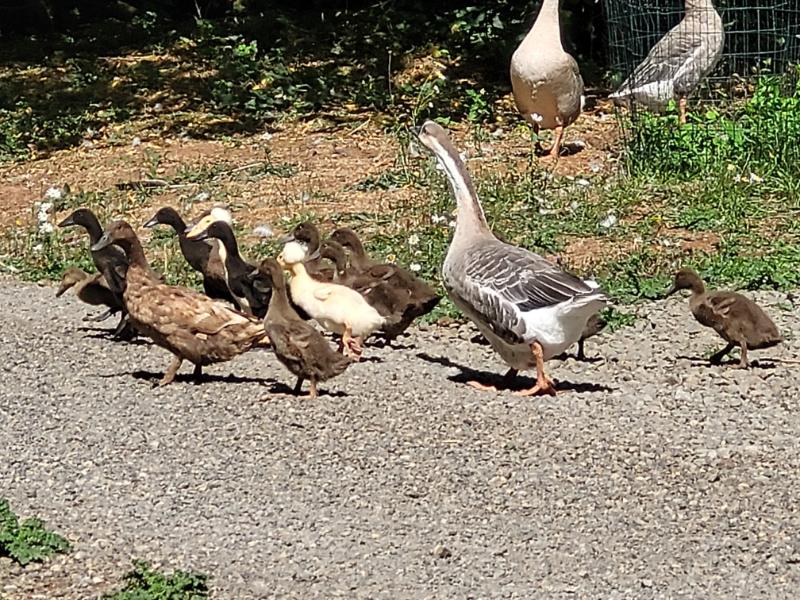
I tried different types of guard geese to see what worked best. African geese ended up being the top performers. They stay put and keep their focus on the area they are supposed to protect.
Embden and Chinese goslings had a bad habit of wandering off. When one wandered, the entire adult flock would follow. That created more work than protection.
Later on, I adopted a trio of older Pilgrim and Embden geese. They became their own separate flock. Most of the year both groups interact well. During nesting season, they need to be separated. One year I caught the Pilgrim goose plucking all the feathers from the back and neck of a nesting African goose. Outside of nesting season, the two flocks live side by side without many problems. Every now and then they argue loudly over who gets to use which pool, but that is about it.
I started small with just two goslings from a kid on Craigslist. At the time we had about eight adult ducks. I added the goslings to the flock when they were around six weeks old.
Goslings do better when they get onto fresh grass early and bond with the main flock. If they spend too much time in the brooder with only each other, they become less connected to the flock. Those original two geese are still some of my best guard geese today.
The flock has grown to about twelve to fifteen geese. Some were hatched here on the farm. Others came from hatcheries. That original pair set the example for the rest.
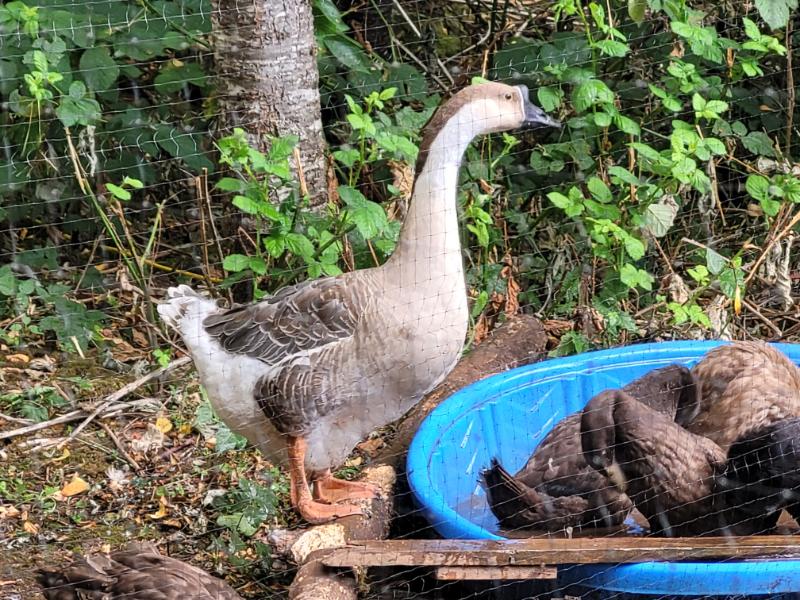
The geese free range with the ducks and chickens from around 10 a.m. until dusk. At night they all go inside the electric fence.
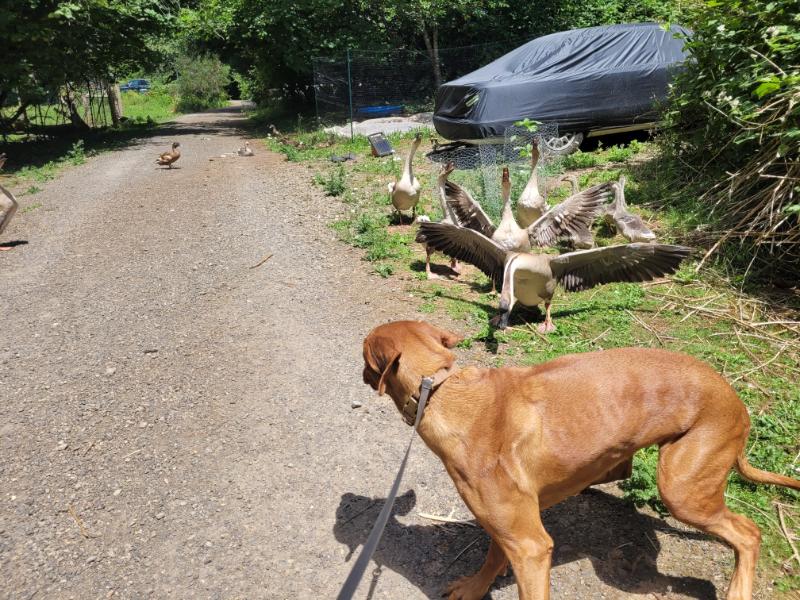
Sometimes the geese wander across the street to eat fresh grass. But they know they should not be out there. As soon as they see me coming, they run back onto the property. They are smart enough to read tone and body language. If you yell or make noise, they know they are in trouble.
Pro tip: Ducks and geese hate open black umbrellas. It probably reminds them of a large predator overhead. If you need to get them moving, that trick works every time.
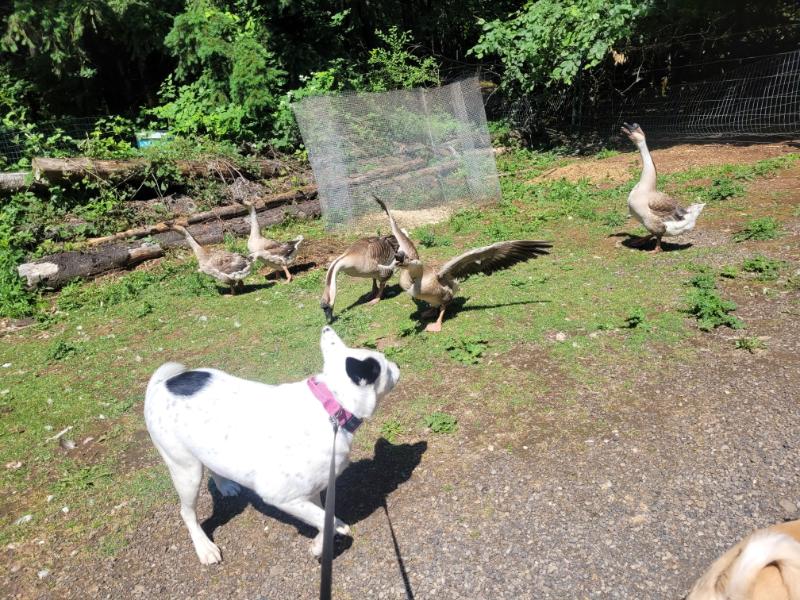
We have a lot of delivery drivers coming to the farm. The geese make plenty of noise when people arrive, but they have never attacked a visitor. Their job is to announce, not assault.
Yuri, our big male guard goose, used to be the exception. He bit me on the backside once and would come at me full of attitude. That ended when I learned how to catch him. Once a goose is picked up, it submits quickly. Yuri stopped his little power trips after that. Now he mostly just honks like the rest of them.
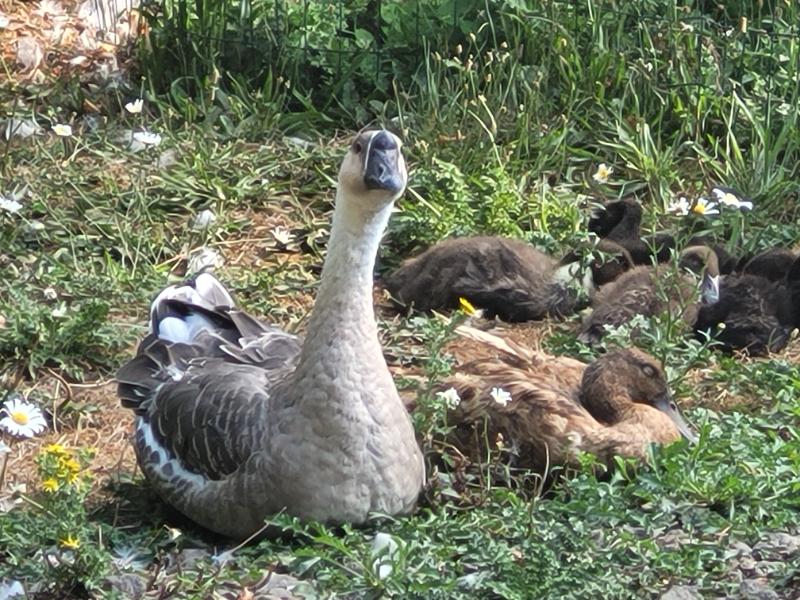
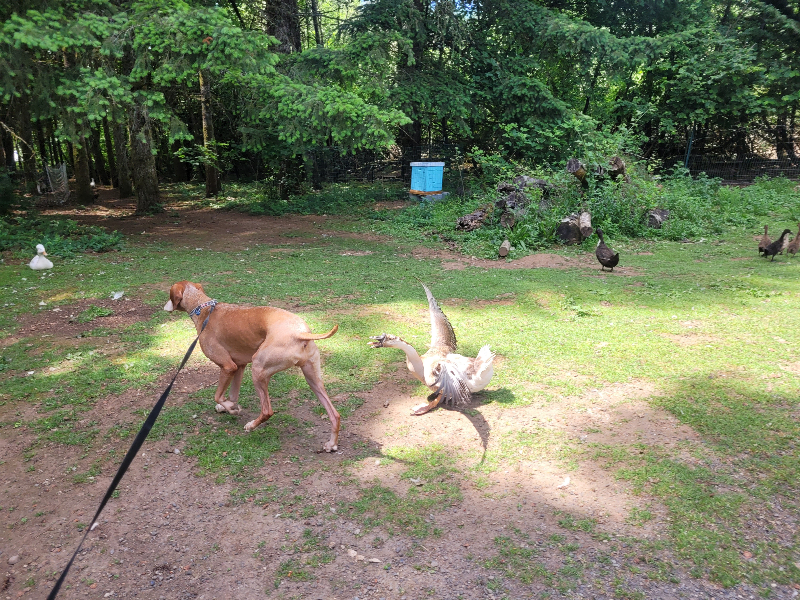
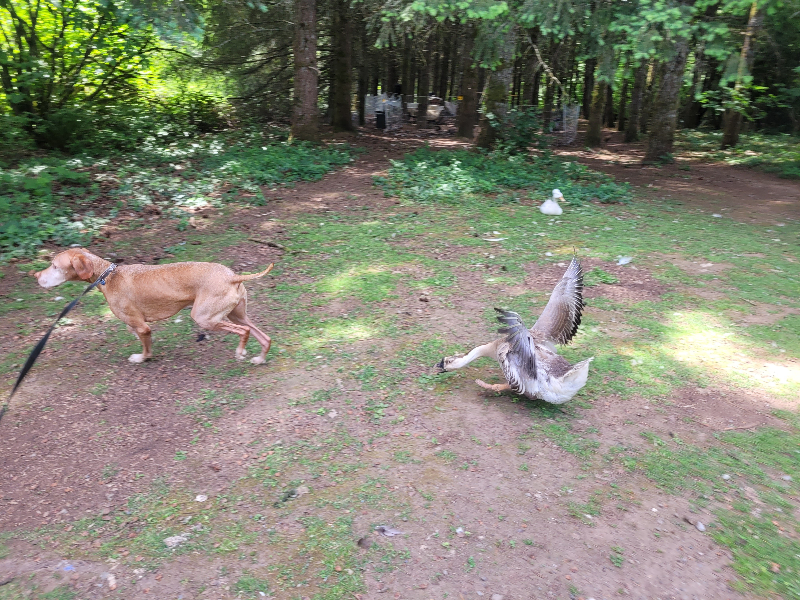
We also offer dog boarding on the farm, and the flock of guard geese has interacted with more than 150 different dogs at this point. They are very good at sizing up dogs and can tell which ones have a high prey drive. If a dog shows too much interest in the ducks or geese, the flock either avoids it or makes a defensive display.
When they are guarding ducklings or goslings, the guard geese become much more likely to directly confront a dog that crosses the line. One of our regular dog boarding dogs, Jasper the Vizsla, used to act very predatory toward the ducks. If he got the chance, he would try to go after them. That attitude changed the day one of my best guard geese charged straight at him and chased him away from the ducklings.
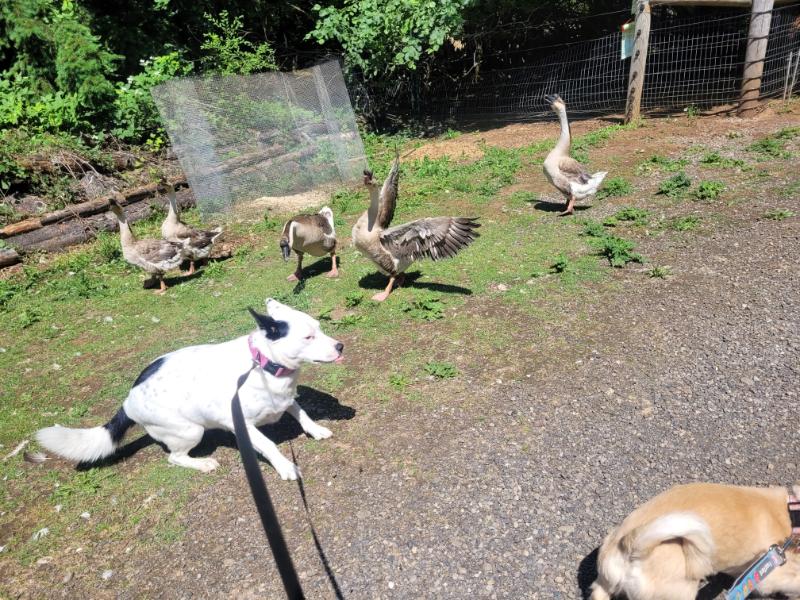
After that, Jasper never tried to attack a duck again. He actually started going out of his way to show that he wasn’t interested in being aggressive toward the flock. That is what a good guard goose can do.
Guard geese are especially good at deterring aerial predators like owls and hawks. They can also alert to ground predators, but they are not a match for everything. Coyotes and bobcats can take geese. What the geese provide is an early warning. They ruin the predator’s element of surprise. That extra noise and movement often makes the difference between losing birds and keeping them safe.
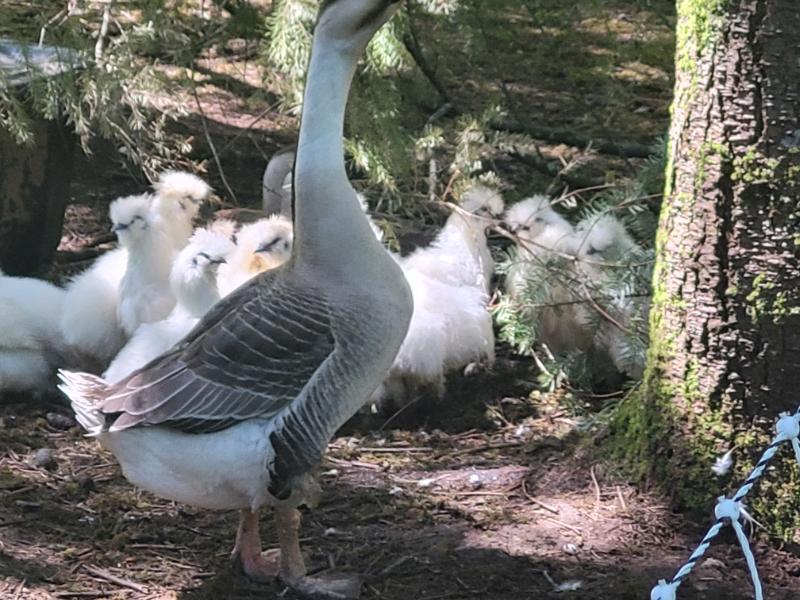
Getting guard geese was one of the best decisions I made for the farm. They are alert, tough, and low maintenance. They keep watch, they make noise, and they protect the ducks and chickens by making sure nothing sneaks up on them.
African geese have worked best for me, but Pilgrim and Embden geese also have their place. The key is starting them young with the flock so they learn the routine early.
If you are dealing with aerial predators, a guard goose might be the most effective and natural security system you can add to your farm.
Message us if you are interested in getting your own guard geese.